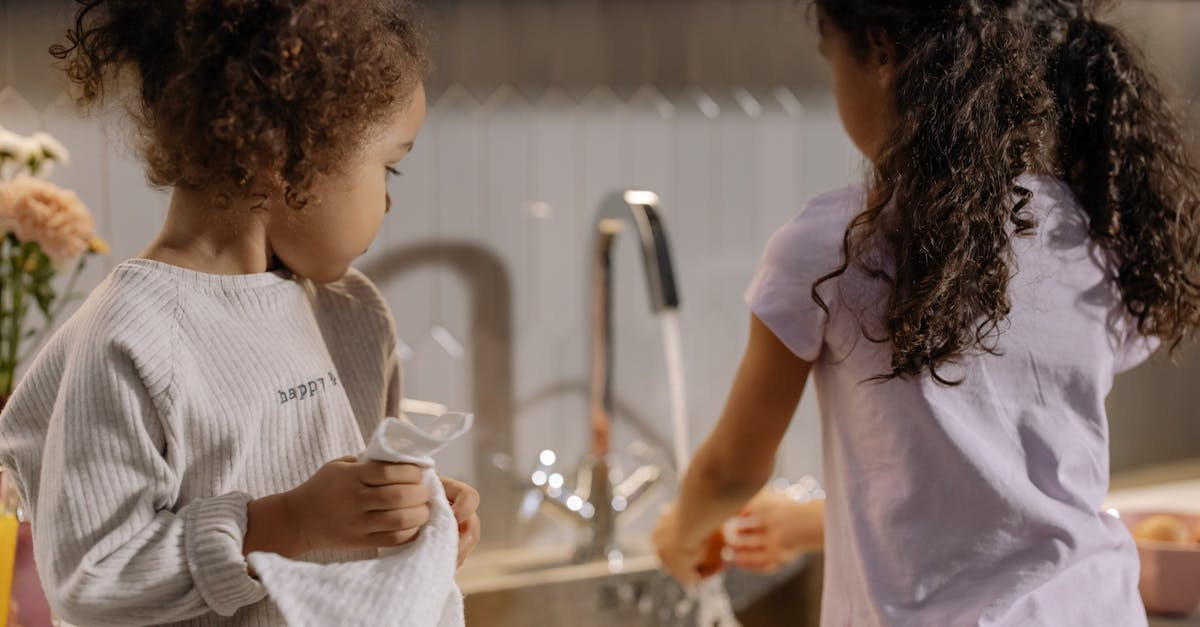
Why Kids Resist Chores So Vehemently (And What Actually Works to Get Them Helping)
Every parent has been there: you ask your child to do a simple chore, like putting away their toys or setting the table, and you’re met with groans, protests, or a sudden, profound inability to hear. It feels like a personal affront, a direct challenge to your authority, or worse, proof that your child is inherently lazy or ungrateful. I’ve heard countless parents express frustration, asking me, ‘Why is it such a battle every single time? Don’t they see all I do?’
What if I told you that your child’s resistance to chores isn’t usually about defiance or laziness? What if it’s deeply rooted in their developmental stage, their understanding of agency, and surprisingly, in the very way we, as parents, frame and introduce these tasks? For years, I struggled with this in my own home, feeling like a broken record, constantly reminding, nagging, and occasionally, resorting to threats or bribes. It was exhausting and ultimately, ineffective. It wasn’t until I started looking beyond the surface behavior and into the underlying psychology that everything shifted.
This isn’t about magical solutions that turn your child into a chore-loving robot. It’s about understanding the ‘why’ behind the resistance and implementing strategies that genuinely build intrinsic motivation and a sense of shared responsibility, rather than just forcing compliance. The goal isn’t just to get the job done, but to raise competent, contributing members of the family who understand the value of work.
Key Takeaways
- Children often resist chores due to a lack of autonomy, perceived unfairness, or feeling overwhelmed, not necessarily defiance.
- Shifting from external motivators (rewards, punishments) to internal ones (contribution, mastery) fosters lasting cooperation.
- Involve children in chore planning and decision-making to boost their sense of ownership and reduce resistance.
- Focus on teaching skills and fostering competence, breaking down tasks into manageable steps.
- Connect chores to real-world impact and family well-being, making the ‘why’ tangible and relatable.
The Illusion of Laziness: Why We Misinterpret Resistance
The biggest mistake I see parents make, and certainly one I made for a long time, is chalking up chore resistance to pure laziness or naughtiness. It’s easy to view a child sprawled on the couch ignoring your request as simply being defiant. However, in my experience, the roots run much deeper. Children are not miniature adults with the same executive functioning skills. Their brains are still developing, especially the prefrontal cortex responsible for planning, impulse control, and understanding long-term consequences.
Consider this: when you ask a 5-year-old to ‘clean their room,’ what does that even mean to them? To us, it’s an obvious sequence of tasks: pick up clothes, put toys in bins, make the bed. To a child, it can be an overwhelming, undifferentiated blob of ‘stuff.’ They lack the mental organizational framework we take for granted. This cognitive overload often manifests as inaction or avoidance, which we then incorrectly label as laziness. It’s not that they don’t want to do it, it’s that they don’t know how to even start, or the sheer scale of the task feels insurmountable.
Furthermore, children crave autonomy. From toddlerhood, they are wired to assert their independence. When a chore is dictated, especially if it interrupts play or a preferred activity, it’s perceived as an external control, stripping them of their agency. Their ‘no!’ is often less about refusing the task itself and more about reclaiming a sliver of control over their own lives. I’ve found that acknowledging this need for autonomy, even in small ways, can dramatically reduce friction. Instead of ‘Clean your room now,’ try ‘Would you like to put away your books or your cars first?’ This simple rephrasing can work wonders because it offers a choice, giving them a sense of control over how the task gets done, even if the what remains non-negotiable.
Another overlooked factor is the social comparison, particularly in multi-child households. Children are acutely aware of fairness. If one child perceives that another has fewer or easier chores, or that they are always asked to do something while a sibling is playing, resistance becomes a protest against perceived injustice. In my family, we started a visible chore chart with equal distribution, even if the tasks varied in nature, and that transparency significantly cut down on the ‘It’s not fair!’ arguments. The ‘laziness’ narrative often blinds us to these very real, age-appropriate, and psychologically valid reasons for a child’s inaction or protest, making our responses less effective.
The Fatal Flaw of External Motivation: Why Rewards and Punishments Backfire Long-Term
It’s tempting, in the face of persistent chore resistance, to resort to rewards and punishments. “If you clean your room, you can have screen time.” Or, “If you don’t clean your room, there’s no dessert.” While these tactics might yield immediate, short-term compliance, in my experience, they are a fatal flaw for fostering true responsibility. They create a transactional relationship with chores, rather than cultivating an intrinsic motivation to contribute.
The problem with external motivators is twofold. Firstly, they undermine intrinsic motivation. When a child performs a chore solely for a reward (be it praise, money, or screen time), their focus shifts from the inherent value of the task (e.g., contributing to a tidy home, developing self-sufficiency) to the prize at the end. Once the reward is removed, or if a better ‘deal’ comes along, the motivation evaporates. I’ve seen parents continually escalate rewards, constantly needing to offer something bigger or better, just to maintain the same level of cooperation. It becomes an exhausting, never-ending negotiation.
Secondly, punishments often breed resentment and secrecy. A child forced to do a chore under threat might do it, but they’re unlikely to learn the underlying lesson of responsibility or to perform the task with care. Instead, they learn to avoid detection or to resent the chore, and by extension, the parent. This can damage the parent-child relationship, turning cooperation into coercion. In my own family, I noticed that when I relied heavily on threats, my kids would often do the bare minimum to avoid punishment, and sometimes even hide tasks that weren’t done completely, creating more work for me in the long run.
What changed everything for me was shifting the language. Instead of, ‘You need to clean your plate if you want dessert,’ I started saying, ‘It’s important that we all help clear the table so we can enjoy our family time and keep our home tidy.’ The focus moved from a conditional reward to a shared value. We still have dessert, but it’s no longer contingent on a specific chore. The incentive isn’t an external treat, but the satisfaction of a job well done and contributing to the family unit. This might sound subtle, but it’s a fundamental shift from transactional parenting to relational parenting, and it builds far more resilient habits in the long run.
The Power of ‘We’: Shifting from Individual Burdens to Shared Contributions
One of the most profound shifts I made in our household was moving away from the language of ‘your chores’ to ‘our family contributions.’ For a long time, I inadvertently framed chores as individual burdens, like homework assignments. This led to children feeling singled out, especially if they perceived their siblings weren’t pulling their weight. The moment I started emphasizing the collective benefit and the idea that ‘we’ all live here, and ‘we’ all contribute, the dynamic began to change.
In my experience, simply calling them ‘contributions’ instead of ‘chores’ wasn’t enough. We needed to actively demonstrate and discuss why these tasks were important to the family as a whole. For instance, instead of just saying, ‘Take out the trash,’ I’d explain, ‘Taking out the trash helps keep our home smelling fresh for everyone and prevents pests, which makes our shared living space much nicer.’ When my kids set the table, I’d thank them not just for the action, but for ‘helping our family enjoy dinner together more smoothly.’ This connects the task to a tangible, positive outcome that benefits everyone, including them.
This shift also involved bringing them into the decision-making process. We started holding weekly ‘family contribution meetings’ (which, I admit, sounds more formal than it was – usually just over Sunday brunch). We’d list all the tasks that needed doing that week, and rather than me assigning them, we’d discuss who could realistically take on what. Even young children can participate by choosing from a few age-appropriate options. This gives them agency and a sense of ownership. If they choose to vacuum, they’re more likely to follow through because it was their decision, not just an order.
I’ve found that when children feel like active participants in managing the household, rather than just recipients of commands, their resistance diminishes. They see themselves as valuable contributors, not just minions. This fosters a sense of belonging and competence. It’s about building a team mentality. I remember one week when my youngest, usually the most resistant, volunteered to sort laundry because he felt proud of his color-matching skills. It wasn’t about the task, but the ‘we’ and the ‘how’ that made all the difference. This approach doesn’t just get chores done; it builds essential life skills and strengthens family bonds.
Break It Down: The Overlooked Power of Scaffolding and Skill-Building
One of the most common reasons children resist chores is simply that the task, as presented, feels too big, too complex, or they genuinely don’t know how to do it effectively. We, as adults, often assume these skills are innate or easily grasped, but in my experience, that’s rarely the case. We need to intentionally teach, scaffold, and break down tasks, much like we would with academic learning.
Think about asking a 4-year-old to ‘clean their room.’ What they hear is often a vast, undefined mandate. What if, instead, you said: ‘Let’s pick up all the red blocks first and put them in this bin. Great job! Now, let’s gather all the stuffed animals into their basket.’ This is called scaffolding – providing just enough support to help them accomplish a task they couldn’t do independently, then gradually removing that support as they gain proficiency. I used to get frustrated when my kids would ‘clean’ their room, only for it to look like a tornado hit it again an hour later. It wasn’t until I sat down with them and literally demonstrated each step – ‘This is how we fold a shirt. This is where the dirty clothes go.’ – that I saw a real difference.
Skill-building is equally crucial. Many chores require a surprising amount of fine motor skills, organization, or sequencing. A child might resist setting the table because carrying multiple plates feels precarious, or they can’t remember where all the utensils go. Instead of getting frustrated, use these moments as teaching opportunities. ‘Let’s try carrying just one plate at a time. And remember, the fork goes on the left, knife on the right.’ This not only equips them with the necessary skills but also reduces their anxiety about failing, which is a huge motivator for resistance.
I also found immense success in using visual aids. A simple picture chart detailing the steps for making their bed or tidying the bathroom transformed abstract commands into concrete, manageable steps. For older children, a checklist serves a similar purpose, helping them track their progress and experience the satisfaction of completion. The key is to remember that chore time is also learning time. It requires patience and initial investment of your time to teach and guide, but the payoff in long-term competence and willingness to help is immeasurable. When a child feels competent, they are far more likely to engage voluntarily. It’s the difference between saying ‘Do the dishes’ and saying ‘Let’s learn how to do the dishes so you can feel proud of helping out.’
Connecting Chores to Real-World Impact: The ‘Why’ Beyond ‘Because I Said So’
Children are naturally curious about the world and their place in it. They want to understand the ‘why’ behind rules and requests. Yet, when it comes to chores, many parents fall back on the classic, and frankly, ineffective, ‘Because I said so.’ In my experience, this shuts down curiosity and fosters resentment. To truly overcome chore resistance, we need to connect chores to their real-world impact, making the ‘why’ tangible and relatable.
Consider the difference between: ‘You need to put your laundry away,’ and ‘When we put our clean laundry away, it means we’ll have fresh clothes ready for school tomorrow, and it helps keep our rooms clear so we don’t trip over things.’ The second statement provides context, consequence, and benefit. It explains how their action (or inaction) directly affects their own comfort and the smooth functioning of the household. I found that when my children understood this direct link, they were far more likely to cooperate.
This connection can extend beyond immediate benefits to broader family well-being. For younger children, this might be: ‘When you help clear your toys, it means there’s more space for us to play together later.’ For older children, it could be: ‘When everyone contributes to meal prep, it means we all get to eat dinner sooner, and I have more energy to help you with your homework.’ I even started highlighting the financial impact, in an age-appropriate way. ‘When we take care of our things and keep the house tidy, it helps our family save money because we don’t have to replace broken items or spend extra on cleaning services. That means more money for family trips or fun activities.’
The key is to articulate the chain of events: Action leads to Consequence, which leads to Outcome. This empowers children by showing them their agency and impact. It turns a seemingly meaningless task into a vital part of the family ecosystem. I remember my son, after we discussed how recycling helps the planet, enthusiastically taking charge of separating our recyclables. It wasn’t just ‘a chore’ anymore; it was ‘his contribution to protecting the earth.’ When children feel their actions genuinely matter and contribute to something larger than themselves, their motivation shifts from reluctant compliance to genuine engagement. This fosters a sense of purpose and responsibility that transcends any immediate reward or punishment.
The Iterative Process: Adapting Strategies as Children Grow
What works for a toddler will absolutely not work for a teenager. This might seem obvious, but I often see parents cling to outdated chore strategies simply because ‘that’s what we’ve always done.’ In my experience, sustained chore cooperation requires a dynamic, iterative approach that constantly adapts to a child’s evolving developmental stage, interests, and capabilities. Failure to adapt is a primary reason initial strategies often fall apart.
For toddlers and preschoolers (ages 2-5), the focus should be on simple, immediate tasks integrated into their play, with heavy parental involvement and enthusiastic praise. Think ‘Put the red car in the red bin!’ or ‘Help Mama wipe the table!’ Keep it short, make it a game, and celebrate every tiny success. Offering limited choices (‘Do you want to put your socks in the basket or your shirt?’) is also powerful for this age group.
Elementary school children (ages 6-11) are capable of more complex tasks and understanding basic consequences. This is where clear expectations, consistent routines, and the ‘family contribution’ meetings I mentioned earlier become invaluable. They can participate in creating chore charts and benefit from learning specific skills. This is also a great age to introduce the idea of contribution to the family unit, beyond just their own belongings. They thrive on feeling competent and helpful. If they’re struggling with a task, break it down, teach them the skill, and practice together.
Teenagers (ages 12-18) require a different touch. They are highly motivated by autonomy and social connection. Dictating chores will almost certainly lead to eye-rolls and resistance. Instead, frame contributions around their increasing independence and the practical skills they’ll need as adults. ‘Learning to manage your own laundry now means you’ll know how to do it when you’re at college,’ or ‘Helping with dinner allows us to spend more time together as a family.’ Offer more flexibility in when and how tasks are completed, as long as they meet a deadline. Allow them to take ownership of larger areas, like full meal preparation once a week, or managing the family recycling. The conversation shifts from ‘Do this’ to ‘Here are the things that need to get done this week for our household to function; how would you like to contribute, and when will you get them done?’ I’ve found that when teenagers feel respected and given genuine responsibility, they often rise to the occasion far better than when they are simply told what to do.
The iterative process also means regularly checking in, providing constructive feedback without criticism, and being open to adjusting the chore load. My rule of thumb is: if a strategy isn’t working for more than a couple of weeks, it’s time to re-evaluate. It’s not a sign of failure, but an opportunity to adapt and refine, ensuring our approach remains effective as our children grow and change.
Empowering Autonomy: From Resistance to Ownership
At the heart of much chore resistance lies a child’s innate desire for autonomy. As parents, we often default to a command-and-control approach, which clashes directly with this developmental need. In my journey, recognizing and intentionally empowering my children’s autonomy was the single most impactful shift in turning chore battles into cooperative efforts.
This isn’t about letting children do whatever they want; it’s about providing controlled choices and allowing them to experience the natural consequences of their decisions. Instead of a direct order, frame tasks as options whenever possible. For younger children, it might be: ‘Do you want to put your shoes in the basket or on the shoe rack?’ For older children: ‘These three tasks need to be done before dinner; which two would you like to take on, and which one should I do?’ Even small choices can make a child feel like an active participant rather than a passive recipient of instructions.
Another powerful autonomy-building tool is allowing natural consequences, within safe limits. If a child consistently neglects to put away their clean laundry, they might find themselves without their favorite shirt for school. If they don’t help prepare dinner, they might have to wait longer to eat, or eat a simpler meal. The key here is to let the consequence be a direct, logical result of their action, rather than an arbitrary punishment from you. In my household, when my son realized he couldn’t find his favorite soccer jersey because he hadn’t put away his laundry, that was a far more effective lesson than any amount of nagging from me.
We also started involving the children in the planning of chores. Instead of me dictating everything, we’d collaboratively brainstorm what needed to be done to keep our home running smoothly. This gives them a sense of ownership over the list itself. When they contribute to creating the plan, they’re much more invested in seeing it through. This process might take a little longer upfront, but it pays dividends in reduced resistance and increased buy-in. I’ve found that when my kids feel a sense of agency over their responsibilities, they approach them with a completely different mindset – one of ownership, not obligation. It transforms chores from a battleground into a training ground for life skills and responsible independence.
Frequently Asked Questions
Q: My child still throws a tantrum every time I ask them to do a chore. What should I do?
A: Tantrums, especially in younger children, are often expressions of frustration or a desire for control. Instead of engaging in a power struggle, acknowledge their feelings (‘I see you’re upset about cleaning up right now’). Then, calmly state the expectation and offer limited choices to give them a sense of agency (‘When you’re ready, you can put away your blocks or your cars first’). For younger kids, making it a game or doing a small part with them can sometimes break the cycle. For older children, ensure they understand the ‘why’ behind the chore and involve them in scheduling, offering more autonomy. Remain firm but empathetic, and avoid escalating the emotional intensity.
Q: Should I pay my children for chores, or is that a bad idea?
A: While paying for chores can offer short-term compliance, in my experience, it often undermines intrinsic motivation for contributing to the family. It can turn chores into a transactional arrangement rather than a shared responsibility. I recommend having a baseline of ‘family contributions’ that are expected without pay, as everyone living in the home contributes to its upkeep. For extra tasks beyond these baseline expectations, or for learning about money management, you might consider offering payment. The distinction is crucial: contributions are about belonging and shared responsibility, while paid tasks are about earning and financial literacy.
Q: My child procrastinates endlessly. How can I get them to start?
A: Procrastination often stems from feeling overwhelmed, lacking clear steps, or not being intrinsically motivated. First, break down the chore into the smallest possible, actionable steps. Use visual checklists if helpful. Second, discuss the ‘why’ – how does completing this task benefit them directly or the family as a whole? Third, offer flexibility in when it’s done, but set a firm deadline. For example, ‘The dishwasher needs to be unloaded before dinner. You can do it now or after your show, but it must be done by 5 PM.’ Avoid nagging; let the natural consequences (e.g., no dinner until it’s done, or you have to do it and they miss out on something) provide the learning opportunity.
Q: What if my child does a ‘bad’ job? Should I redo it or make them fix it?
A: This is a delicate balance. If you consistently redo their work, they learn you’ll pick up the slack, and their effort won’t improve. If you always make them fix it, they might feel discouraged. My approach is to focus on teaching and skill-building. For minor imperfections, offer gentle guidance: ‘That’s a great start! Next time, let’s try to get all the crumbs from under the table too.’ For tasks that are clearly not done to an acceptable standard and they have the capability, make them redo it, but with your support. Sit beside them, offer specific instructions, and demonstrate. Frame it as ‘learning to do a thorough job,’ not as a punishment for failure. The goal is competence, not perfection, especially initially.
Q: How do I handle chore resistance in a multi-child household without constant fighting?
A: Transparency and shared ownership are key. Create a visible chore chart where everyone’s contributions are clearly listed. Rotate chores regularly so no one feels stuck with the same disliked task. Involve children in the chore assignment process (e.g., letting them pick tasks from a rotating list). Emphasize the ‘we’ and the ‘us’ – ‘We all need to contribute to keep our home running smoothly.’ Address perceived unfairness by explaining that while tasks might differ, the effort and contribution are valued equally. Consistency in expectations and follow-through for all children is paramount.
Conclusion
Overcoming chore resistance in children isn’t about finding a magic bullet or a perfect system. It’s about understanding the developmental psychology at play, shifting our parental mindset, and implementing strategies that foster genuine responsibility, not just temporary compliance. By recognizing that resistance often stems from a lack of autonomy, overwhelming tasks, or a need for understanding, we can move beyond frustration to effective parenting.
Embrace the power of ‘we,’ involve your children in decision-making, teach skills with patience, and connect their contributions to the real-world impact on your family’s well-being. Move away from transactional rewards and punishments, focusing instead on building intrinsic motivation and a sense of belonging. Remember, raising children who contribute willingly to their home is not just about getting tasks done; it’s about nurturing competent, empathetic, and responsible individuals ready to thrive in the world. The journey is iterative, requiring constant adaptation, but the rewards are immeasurable. Start today by choosing one chore and applying a ‘break it down’ or ‘connect to impact’ strategy, and observe the subtle but powerful shift in your child’s engagement.
Written by Liam O'Connell
Parenting Strategies & Education
With a background in early childhood education, Liam brings practical, classroom-tested strategies to home environments.
You Might Also Like

Why Toddler Tantrums Feel Impossible (And What Actually Works for Real Calm)
Toddler tantrums can be overwhelming. Learn why conventional approaches often fail and discover practical, empathetic strategies that actually work for lasting calm.

Why Toddler Screen Time Feels Impossible (And What Actually Works for Healthy Habits)
Struggling with toddler screen time? Discover why common approaches fail and what truly creates healthy digital habits without constant battles.

Why Toddler Discipline Feels Impossible (And What Actually Works for Real Cooperation)
Struggling with toddler discipline? Discover why traditional methods often fail and what truly cultivates cooperation and self-regulation in young children.